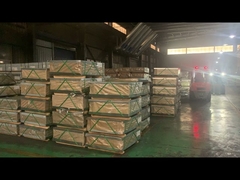
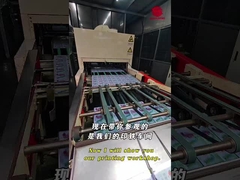
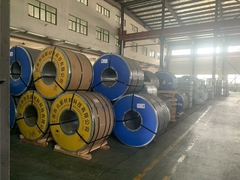
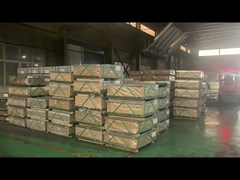
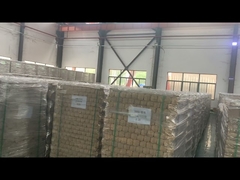
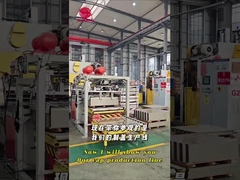
Brief: In this informative video, gain concise insights into the features that matter most for real-world use of TS275 Cold Rolled Tinplate. We'll walk you through the production process, explore its metallic luster coating, and demonstrate its applications in food and industrial packaging. Learn how different tempers and hardness levels make this SPTE/TFS material suitable for everything from can bodies and ends to caps and closures.
Related Product Features:
TS275 is a cold-rolled, low-carbon steel coil coated with pure tin on both sides, known as Electrolytic Tin Plate (SPTE).
Available in precise thicknesses of 0.23mm and 0.24mm, ideal for forming and fabrication.
Features a bright metallic luster and excellent corrosion resistance for product protection.
Offers various tempers (T1 to T5, DR-8) with defined hardness levels for different applications.
Primarily used for food packaging, including can bodies, ends, and beverage containers.
Also suitable for pharmaceutical, daily necessities, instrument, and industrial packaging.
Used for aerosol containers, caps, closures, screw caps, and shallow-drawn cans.
Manufactured through a controlled production process ensuring consistent quality and performance.
FAQs:
What is TS275 Tinplate and what does SPTE stand for?
TS275 is a cold-rolled, low-carbon steel coil coated with commercial pure tin on both sides. SPTE stands for Electrolytic Tin Plate, which is the English abbreviation for this material.
What are the main applications for this tinplate?
This tinplate is widely used for food packaging (can bodies and ends), pharmaceutical packaging, daily necessities packaging, instrument packaging, industrial packaging, aerosol containers, and various caps and closures.
What thickness options are available for TS275 Tinplate?
The TS275 Tinplate is available in precise thicknesses of 0.23mm and 0.24mm, making it suitable for various forming and fabrication requirements in packaging applications.
How do the different temper grades affect the tinplate's use?
Different temper grades (T1 to T5, DR-8) offer varying hardness levels suitable for specific applications. For example, T1 is for deep drawing, T3/T4 for can ends and bodies, and DR-8 for small diameter round can bodies and ends.