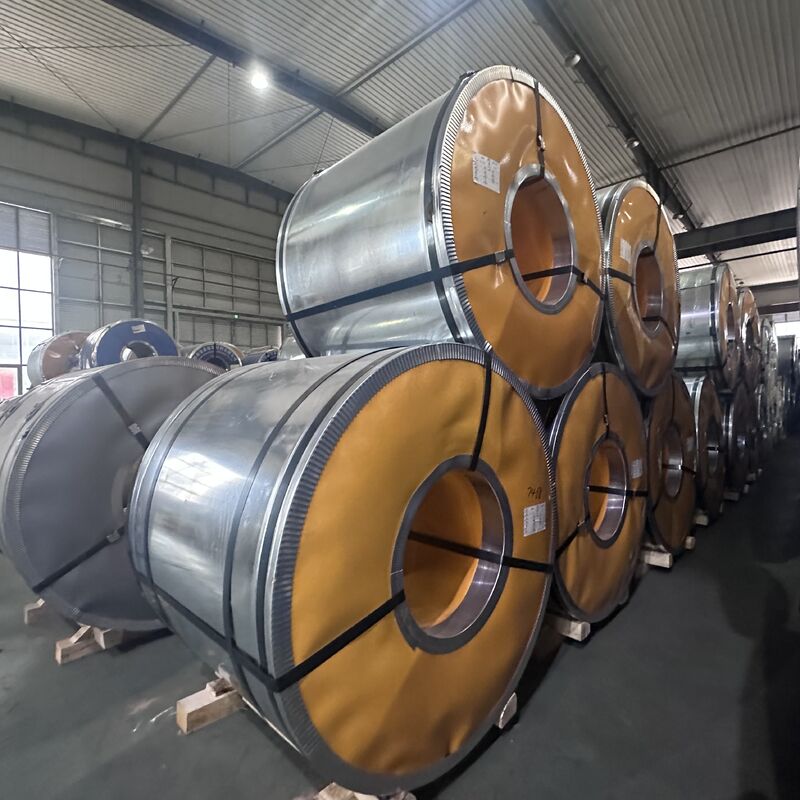
Detailed Product Introduction & Core Technical Features
Electrolytic Tinplate (SPTE) is a highly engineered packaging steel combining a cold-rolled low-carbon steel substrate with a micro-thin layer of pure metallic tin. This structure bridges the structural strength and formability of steel with the non-toxic, chemical inertness of tin. Manufactured via a continuous electrolytic coating process that guarantees precise coating distribution and absolute thickness uniformity, this Tinplate Coil serves as a vital industry-standard food can material for automated canning lines worldwide.
The defining characteristic of our material is its exceptional corrosion resistance against aggressive chemical environments. In long-term food preservation, the metallic tin coating operates as a dual-layer barrier, providing galvanic sacrificial protection under anaerobic interior conditions and passive stability when exposed to external humidity. To enhance this defense, the coils undergo a continuous chemical passivation treatment that minimizes sulfur staining and rust tracking. For highly acidic contents, advanced food-grade lacquers are applied over the tinplate, providing a zero-permeability chemical shield that preserves flavor and guarantees complete product safety without micro-cracking during fabrication.
Complete Structural Customization & Processing Options
To fulfill the technical requirements of global packaging operations, we provide comprehensive customization options across our entire Tinplate Coil inventory. Our facilities offer precise control over the metallurgical, dimensional, and surface profiles of the steel, ensuring your customized food can material integrates directly into specific production lines without machinery recalibration.
A foundational element is controlling mechanical properties through Batch Annealing (BA) or Continuous Annealing (CA). Continuous Annealing delivers a uniform, fine-grained matrix for higher hardness and structural stiffness, making it ideal for two-piece and three-piece can bodies. Batch Annealing yields a ductile, stress-relieved microstructure optimal for complex stamping, deep-drawing, and manufacturing easy-open ends (EOE) or twist-off caps. Furthermore, we provide advanced differential tin coating configurations, applying a heavy tin mass on the interior face (e.g., 5.6 g/m²) to resist corrosive foods and a lighter coating on the exterior (e.g., 1.1 g/m²) to lower material costs. High-definition, food-safe surface printing and lacquering are also fully customizable.
Technical Specifications & Mechanical Parameters Table
Our complete manufacturing cycle conforms strictly to international engineering standards, including JIS G3303, ASTM, DIN, and GB frameworks. Every production lot undergoes automated testing to ensure narrow dimensional tolerances, precise coating distribution, and exact mechanical properties.
The technical table below details the operational specifications available for our commercial-grade coils and sheets:
| Technical Parameter Field | Industrial Operational Specifications & Range |
|---|
| Product Designations | Industrial Tinplate Sheet / Continuous Tinplate Coil (SPTE) |
| Core Base Material Standards | MR, SPCC, DR8, Q195, A08AL, Standard SPTE Substrates |
| Available Thickness Range | 0.15mm to 0.50mm (Ultra-thin to heavy-duty structural gauges) |
| Available Width Capability | 600mm to 1020mm (Slit-to-width options available per line) |
| Annealing Processing | Continuous Annealing (CA) / Batch Box Annealing (BA) |
| Hardness Range (Single/Double) | T1–T5 / DR7–DR9 (Covering soft forming to ultra-high stiffness) |
| High-Strength Advanced Tempers | TH520, TH550, TH580, TH620 (High-pressure resistance steel) |
| Tin Coating Mass Options | 1.1/1.1, 2.8/2.8, 5.6/5.6 g/m² (Equally or Differentially coated) |
| Surface Finish Profiles | Bright (Luster), Stone (Fine pattern), Matte, Silver, Rough Stone |
| Minimum Order Quantity (MOQ) | 25 Metric Tons (Standard single full container load equivalent) |
| Monthly Supply Capacity | 50,000 Metric Tons / Month across integrated production facilities |

Comprehensive Application Scenarios & Downstream Uses
Combining high tensile strength, excellent weldability, and complete barrier protection against gases, light, and contaminants, our Tinplate Coil serves as a vital component in global supply chains. Its primary application as a specialized food can material enables long-term shelf stability without nutrient degradation or refrigeration.
Within the canning industry, this material is extensively processed to form high-volume three-piece welded cans and two-piece drawn-and-ironed (D&I) containers. It reliably holds highly acidic food items like tomato paste and citrus fruits, as well as sulfur-bearing foods like seafood and legumes. The high chemical resistance of our tin layers prevents metal migration, ensuring original taste and purity remain unchanged over years. It is also the standard choice for packaging dry dairy products requiring a hermetic gas seal to prevent oxidation. Beyond food, its high puncture resistance makes it perfect for manufacturing aerosol cans, paint cans, and chemical drums. The structural stiffness of our hard tempers ensures filled industrial cans stack vertically in warehouses without risking distortion or leakage.
Exhaustive FAQ (Frequently Asked Questions )
Q1: What components make tinplate an effective barrier for high-acid food products?
A1: Tinplate utilizes a multi-layered structure featuring a low-carbon steel core for structural rigidity, electroplated with pure tin for galvanic protection. For high-acid foods, inert organic lacquers are baked onto the surface to prevent acidic elements from interacting with the base steel, eliminating corrosion.
Q2: How does choosing between BA and CA processing impact can manufacturing?
A2: Continuous Annealing (CA) creates higher surface hardness and buckling resistance, optimal for can bodies under high vacuum. Batch Annealing (BA) produces ductile steel with excellent elongation, ideal for deep-drawing and stamping intricate easy-open ends or closures.
Q3: What are the benefits of ordering differential tin coatings?
A3: Differential coating applies different weights of tin to each side of the steel. High-volume operations can apply a heavy tin mass on the interior for chemical resistance and a light coating on the exterior for moisture protection, significantly saving material costs.
Q4: What quality control steps are used to ensure safety?
A4: Following JIS G3303 and ASTM frameworks, we run continuous automated optical scans to detect micro-pinholes, alongside routine chemical tests for exact coating weights and cross-hatch adhesion tests for printed lacquers, ensuring global food-contact safety compliance.


 Your message must be between 20-3,000 characters!