PRODUCT OVERVIEW
This specialized steel packaging solution represents the next generation of substrate technology, engineered specifically to meet the rigorous demands of international transit and food safety. Utilizing low-metalloid MR-grade base steel, each tinplate sheet combines high-purity electrolytic tin plating with an advanced matte finish surface structure.
As a primary food can material, this product provides an impermeable barrier against external contamination, organic acids, and atmospheric moisture. The non-glossy, textured surface is explicitly designed to eliminate light reflection, providing an ideal foundation for high-speed lithographic printing and brand lacquering. Whether processed into high-strength containers or custom ends, this material delivers the precise structural stiffness required to survive complex supply chains without dimensional distortion.
CORE PERFORMANCE CHARACTERISTICS
Superior Corrosion Resistance: The MR base steel features an ultra-clean chemical formulation with minimal residual trace elements. When combined with uniform electrolytic tinning, it creates an aggressive defensive shield that successfully resists localized pitting, sulfur staining, and acidic erosion from complex foodstuffs.
High-Speed Printing & Coating Adhesion: The specialized matte finish gives the tinplate sheet a distinct, low-key texture. This engineered surface roughness optimizes ink absorption, preventing ink bleeding and ensuring that vibrant brand graphics and intricate regulatory logos remain sharp, clear, and firmly bonded during subsequent shaping processes.
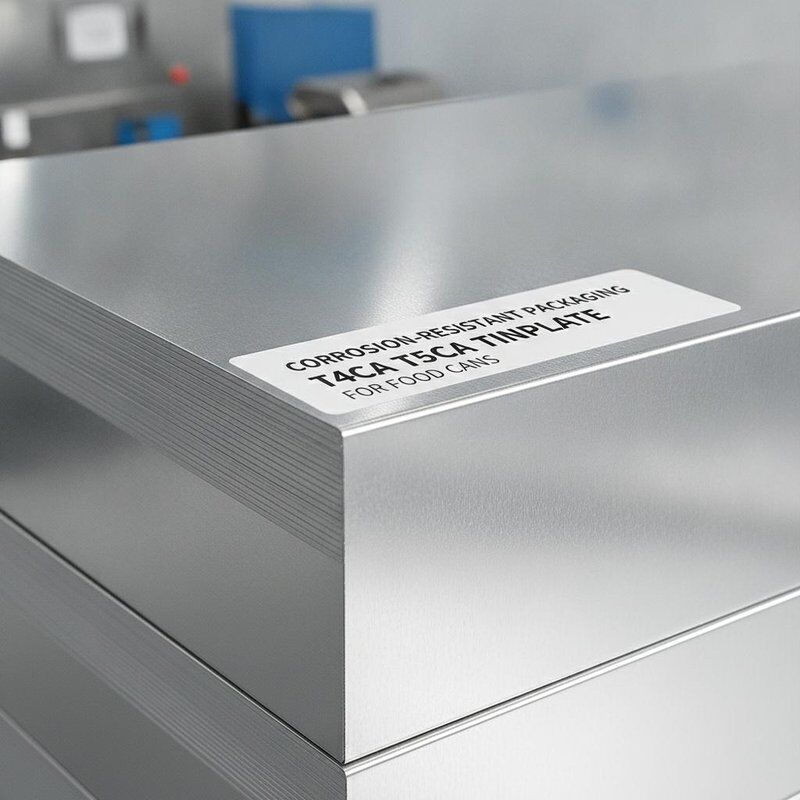
Targeted T4CA & T5CA Hardness: Available in standard continuous-annealed structural tempers. The T4CA variant provides a balanced Rockwell hardness target of 61±3 for versatile forming, while the T5CA variant delivers a rigid target of 65±3. This high tensile stability allows final containers to withstand intense vacuum pressures and physical impacts during transport.
Certified Food-Contact Safety: Completely non-toxic, odorless, and compliant with international food hygiene standards (JIS G3303, ASTM, DIN). The material is 100% recyclable, assisting global brands in reducing their carbon footprint while ensuring total product purity.
TECHNICAL SPECIFICATIONS
| Parameter / Standard | Detailed Technical Configurations & Material Grades |
| Primary Material Classification | Electrolytic Tinplate Sheet / SPTE Coils |
| Core Base Steel Grade | MR, SPCC, DR8, Q195, A08AL |
| Main Industrial Application | High-performance food can material, aerosol caps, chemical containers |
| Surface Finish Type | Matte Finish (Non-reflective, high-adhesion texture) |
| Hardness & Temper Range | T4CA (Rockwell 61±3 HR30T) / T5CA (Rockwell 65±3 HR30T) |
| Compliance & Certification | Fully certified to JIS G3303, ASTM, DIN, and GB standards |
| Minimum Order Quantity (MOQ) | 25 Metric Tons (Standard Export Volume) |
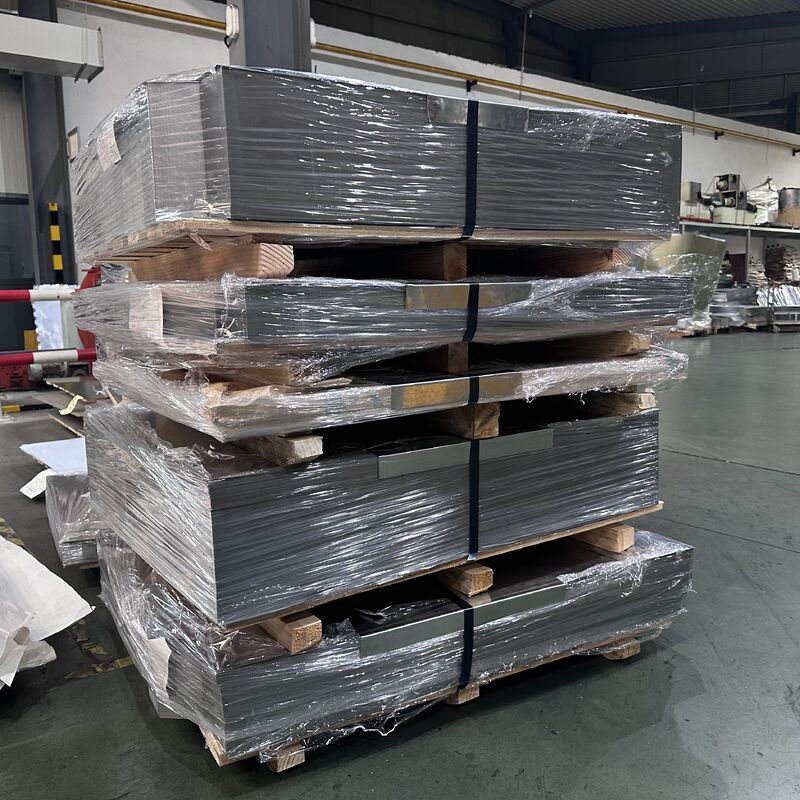
| Packaging & Logistics | Seaworthy heavy-duty packaging with reinforced corner protectors on wooden pallets |

EXCLUSIVE CUSTOMIZATION CAPABILITY
We understand that every canning line and packaging facility operates under unique mechanical parameters. To ensure seamless integration into your existing production machinery, we offer comprehensive customization across all physical dimensions and mechanical properties.
Customers can specify custom sheet dimensions or opt for continuous coils tailored to specific slitting widths. The electrolytic tin coating weight can be differentially adjusted for the interior and exterior faces, allowing you to optimize cost-efficiency while maintaining maximum corrosion resistance inside the can where it interacts with the food product. Furthermore, our state-of-the-art printing workshop offers direct custom lacquering and lithographic printing, delivering ready-to-form sheets directly to your factory floor.
FREQUENTLY ASKED QUESTIONS (FAQ)
Q: Why is MR-grade base steel specifically recommended as a food can material?
A: MR (Metallurgical Residue) steel is tightly controlled during the melting process to limit trace elements like copper, nickel, and chromium. This ultra-pure chemical composition gives the resulting tinplate sheet exceptional chemical stability and corrosion resistance, making it completely safe for storing preserved foods, fish, tomato-based products, and beverages without risking chemical leaching.
Q: What are the distinct practical advantages of choosing a Matte Finish over a Bright Finish?
A: While a bright finish provides a mirror-like shine, a matte finish offers a micro-textured, non-reflective surface. This texture acts as a superior anchoring mechanical bond for industrial coatings, lacquers, and multi-color printing inks. It completely eliminates printing slippage, reduces visible scratches during high-speed can-making handling, and gives export packaging a contemporary, tactile look.
Q: How do I choose between T4CA and T5CA hardness configurations for my manufacturing line?
A: The choice depends entirely on your final component design. T4CA (61±3 HR30T) offers excellent ductility and formability, making it perfect for standard can bodies and parts requiring moderate drawing or bending. T5CA (65±3 HR30T) provides higher yield strength and rigidity, making it the ideal choice for can ends, crowns, and large-volume containers that must resist collapsing under internal vacuum or external stacking loads.
Q: What protective measures are implemented to prevent rust and edge damage during maritime transit?
A: All export orders are packed using heavy-duty, moisture-proof seaworthy packaging. The tinplate sheets are tightly wrapped in anti-rust paper and protective steel sheets, securely strapped to rugged wooden pallets. Reinforced metal corner protectors are applied to prevent any structural impact or edge warping during crane loading and long-distance ocean freight.


 Your message must be between 20-3,000 characters!