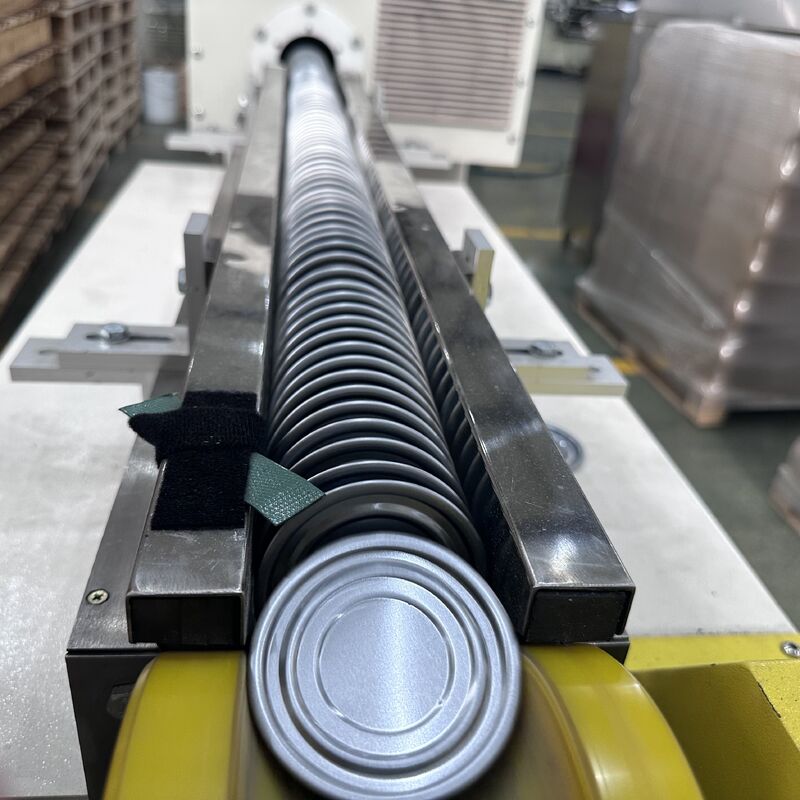
Place of Origin:
China
Brand Name:
QuanJiang
Certification:
ISO9001
Model Number:
20mm 200D Tinplate Lid
Contact Us
The 200D Tinplate Lid represents a benchmark engineering component engineered specifically for high-speed automated packaging lines. Fabricated from certified food can material, this round metal closure delivers a flawless hermetic seal that completely isolates packaged products from environmental hazards, biological contamination, and moisture ingress. As an essential element in modern metal packaging, our tinplate lid balances exceptional material elasticity with rigid structural integrity. With precise dimensional calibration tailored for international standard containers, it acts as a reliable guardian of food safety, freshness, and brand integrity from the processing facility all the way to the consumer's pantry.
Advanced Corrosion Protection: At the core of the tinplate lid is an electrolytic tin coating mass of 2.8/2.8 g/m². This protective barrier provides robust chemical resistance against mild organic acids, volatile sulfur compounds, and saline elements found in various food products, drastically reducing the risk of internal oxidation or iron dissolution.
Retort and Thermal Stability: Utilizing T3 temper cold-rolled steel as its structural substrate, the food can material withstands severe high-temperature retort sterilization processes (up to 121°C for continuous cycles) without suffering from structural buckling, wrinkling, or blistering.
Microscopic Hermetic Sealing: Each lid features an automated application of high-solid liquid lining compound in the curl profile. Once cured, this uniform elastomeric film seals microscopic metal gaps against the can flange, preventing vacuum loss and blocking external microbial penetration.
Seamless Mechanical Seaming: The smooth, precise curvature of the curl profile minimizes frictional drag on seaming chucks, mitigating mechanical jamming risks during mass assembly and maximizing overall equipment efficiency (OEE) for canning operations.
To ensure absolute compatibility and seamless integration with your production lines, we adhere to strict technical parameters based on the standardized 200D specification:
| Technical Metric / Property | Standardized Industrial Specification Value |
| Model Designation / Size | 200D Series |
| Nominal Diameter | Ø50.05 mm |
| Closure Classification | Normal End / Plain Round Bottom End |
| Primary Core Material | Food-Grade Electrolytic Tinplate (ETP) / Tin-Free Steel (TFS) |
| Base Metal Temper State | T3 Temper |
| Tin Coating Mass Distribution | Dual-Sided 2.8 / 2.8 g/m² |
| Outside Curl Diameter | 59.00 mm – 59.20 mm |
| Total Curl Height Profile | 1.80 mm – 2.00 mm |
| Countersink Depth Profile | 3.05 mm – 3.25 mm (Target: 3.15 ± 0.1 mm) |
| Lining Sealing Compound Weight | 32 mg – 40 mg (Dry Film Mass) |
Processed Fruits and Vegetables: Excellent for acidic food can material applications, such as tomato pastes, sliced pineapples, and pickled condiments, where robust anti-acid performance is required.
High-Protein Food Preservation: Widely used in seafood canning (sardines, tuna) and meat products that undergo long-duration thermal autoclave sterilization and require reliable sulfur resistance.
Hygroscopic Dry Powders: Provides an unyielding moisture-proof barrier for infant milk formulas, instant nutritional powders, and gourmet coffee blends that are highly sensitive to oxygen and humidity.
Q1: How does the tinplate lid actively prevent food contamination and rust?
A1: The electrolytic tin layer applied to the food can material serves a dual purpose. It functions as both a durable physical barrier and a sacrificial anode. This configuration suppresses iron dissolution into the contents, effectively preventing internal rusting and safeguarding the taste, color, and nutritional value of the food.
Q2: What are the operational benefits of utilizing T3 temper steel for the 200D model?
A2: T3 temper steel delivers the optimal balance between flexibility and mechanical stiffness. It allows the edge of the tinplate lid to form a smooth, secure double seam with the container flange under high machine pressure, while retaining enough structural rigidity to resist deformation caused by internal vacuum or thermal pressure changes.
Q3: Can this tinplate lid withstand aggressive chemical sterilization environments?
A3: Yes. Our internal and external organic coatings undergo strict boiling tests at 121°C for 30 to 60 minutes. They exhibit no loss of adhesion, no whitening, and outstanding resistance to acid and sulfur compounds, ensuring the coating remains fully intact throughout the product's shelf life.
Send your inquiry directly to us