Place of Origin:
China
Brand Name:
QuanJiang
Certification:
MILL CERTIFICATE,SGS
Model Number:
Tinplate sheet
Contact Us
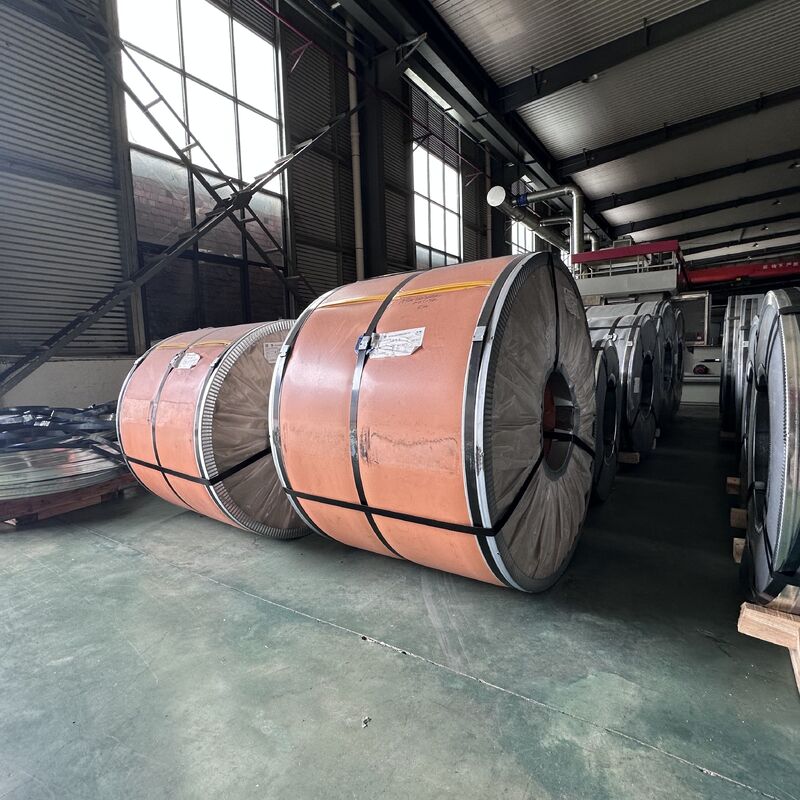
The 0.25mm thickness Tinplate Coil represents a vital material standard within the global metal packaging sector, acting as a structural food can material designed for high-speed, automated formatting lines. Available as standard Electrolytic Tinplate (SPTE) or Electrolytic Chromium Coated Steel (ECCS / TFS), this specific thickness profile delivers an ideal balance between weight reduction and tensile rigidity. The manufacturing process utilizes cold-rolled low-carbon steel strip as the core substrate, which undergoes advanced batch annealing (BA) or continuous annealing (CA) before entering the electroplating line, where commercial pure tin or chromium is uniformly applied to both surfaces.
By supplying this material in a continuous Tinplate Coil format with precision slitting options, industrial manufacturers can optimize their processing yields, reduce scrap rates, and maintain continuous operations on high-speed stamping presses. The core function of this heavy-duty food can material is to provide absolute structural containment. Whether it is subsequently converted into food can bodies, deep-drawn components, or heavy-duty twist-off lids, the 0.25mm gauge provides the necessary burst strength, total gas protection, and reliable resistance to mechanical impact required for mass-distribution food supply networks.
Excellent Corrosion and Rust Prevention: This specialized food can material is engineered to survive aggressive internal and external chemical environments. The continuous electroplated tin layer acts as both a non-reactive physical barrier and a sacrificial anode, preventing rust formation and metal bleeding when exposed to atmospheric moisture, high-acid liquid packs, or salt-heavy preservation brines.
Optimized 0.25mm Thickness Performance: The 0.25mm thickness profile provides exceptional mechanical integrity and dent resistance. This makes the coil highly stable during high-pressure thermal sterilization and vacuum cooling, successfully preventing can paneled distortions or structural buckling even when handling heavier volumes or deep-drawn product configurations.
Superior Surface Adhesion for Advanced Printing: Available in specialized Matte, Stone, Bright, and Silver surface finishes, the metal strip exhibits optimized surface roughness. This microstructure enhances the anchoring profile for protective organic lacquers (like epoxy-phenolic, vinyl, or organosol coatings) and high-density inks, guaranteeing that external CMYK printing remains fully intact without micro-cracking or peeling during intense metal forming.
Excellent Formability and Solderability: The low-carbon steel substrate is processed to precise tempering standards (from ductile T2 up to highly rigid DR8 configurations). This ensures that the material can undergo severe bending, rolling, and high-speed electrical resistance welding without structural tearing, providing a perfectly secure, leak-proof weld seam.
The explicit engineering properties, material configurations, and slitting parameters for the 0.25mm tinplate coil are organized in the industrial data schedule below:
| Technical Parameter Index | Detailed Manufacturing Specifications |
|---|---|
| Product Delivery Format | Slit Tinplate Coil / Continuous Metal Strip / Cut Sheets |
| Material Categories | Electrolytic Tinplate (SPTE) / Tin Free Steel (TFS / ECCS) |
| Target Thickness Focus | 0.25 mm (With precise engineering tolerance of ±0.004mm) |
| Available Width Range | 600 mm to 1050 mm (Custom width slitting based on tooling needs) |
| Coil Inner Diameter (ID) | 508 mm / Standard industrial uncoiler compliance |
| Annealing Process Type | BA (Batch Annealed) / CA (Continuous Annealed) Substrates |
| Hardness & Temper Range | T2, T2.5, T3, T3.5, T4, T5 / Double Reduced DR7, DR7M, DR8 |
| Tin Coating Mass options | 2.0/2.0, 2.8/2.8, 5.6/5.6 g/m² (Available in differential coatings) |
| Surface Finish Profiles | Bright (Melted), Stone (Rough), Matte (Dull), Silver (Velvet) |
| Protective Coatings | Clear Lacquer, Gold Lacquer, White Coating, Aluminum Paste |
| Compliance Certification | ISO 9001, SGS Food Grade, EWC Approved, Mill Test Certified |
| Seaworthy Packaging | Plastic Film + VCI Rust-proof Paper + Metal Shield Casing + Steel Straps |
The unique structural rigidity and corrosion-resistant properties of the 0.25mm Tinplate Coil make it highly valuable across multiple industrial packaging applications:
Two-Piece and Three-Piece Food Can Production: This 0.25mm food can material provides the ideal wall and bottom thickness for mid-to-large sized containers, such as canned milk powders, soup cans, bean cans, and bulk fruit packs, maintaining structural strength during high-pressure sterilization.
Heavy-Duty Twist-Off Lids and Can Ends: The 0.25mm thickness is highly utilized for stamping lug caps, twist-off closures, and large-diameter ring-pull ends. It provides the required spring tension and mechanical strength to ensure a secure, airtight seal against glass jars and metal bodies.
High-Pressure Aerosol and Chemical Can Domes: Used extensively to form the structural top domes and bottom caps of aerosol spray cans, paint cans, and engine oil tins, safely containing high internal propellant pressures.
Sulfur-Rich Protein and Meat Packaging: Ideal for manufacturing processed luncheon meat tins, pet food cans, and marine products. When paired with protective internal lacquers, the tinplate prevents sulfur blackening and discoloration, ensuring long-term food safety.
Q1: What are the main benefits of ordering this material in a Tinplate Coil format over pre-cut sheets?
A: Ordering in a continuous coil format allows large-scale packaging manufacturers to use automatic uncoilers and scroll-shearing lines. This significantly reduces metal scrap, allows custom cutting lengths for different can heights, and boosts production efficiency by minimizing material handling downtime.
Q2: Why is the 0.25mm thickness profile considered an optimal gauge for rigid food cans?
A: The 0.25mm gauge provides the ideal thickness balance for medium-sized or deep-drawn containers. It offers excellent vertical crush resistance and dent protection during transit, while remaining flexible enough for precise high-speed flanging, seaming, and stamping without cracking.
Q3: How does the material resist chemical attack and rust from high-acid food fills?
A: Resistance is achieved by combining electroplated tin (which provides galvanic protection to the steel core) with advanced chemical passivation. For aggressive acidic fills like tomatoes or pickles, we apply an additional interior layer of organic Gold or Organosol lacquer, creating a completely inert barrier against corrosion.
Q4: What technical criteria must a buyer clarify to receive an accurate industrial quote?
A: To provide an accurate technical quote, please specify whether you require SPTE or TFS, the exact thickness (0.25mm), target slit width, required temper/hardness grade (e.g., T3 or DR8), required tin coating mass (e.g., 2.8/2.8 g/m²), surface finish style, total volume in metric tons, and internal coil weight limits.
Q5: What protective measures prevent the coil from rusting or nesting during maritime transit?
A: Each coil is wrapped in heavy-duty moisture-proof plastic film, followed by multi-layered VCI anti-rust paper. It is then enclosed in a structural steel outer shell with robust edge guards, tightly bound with high-tensile steel straps, and fixed onto reinforced wooden pallets to prevent moisture entry and physical shifting during ocean shipping.
Send your inquiry directly to us