Product Introduction
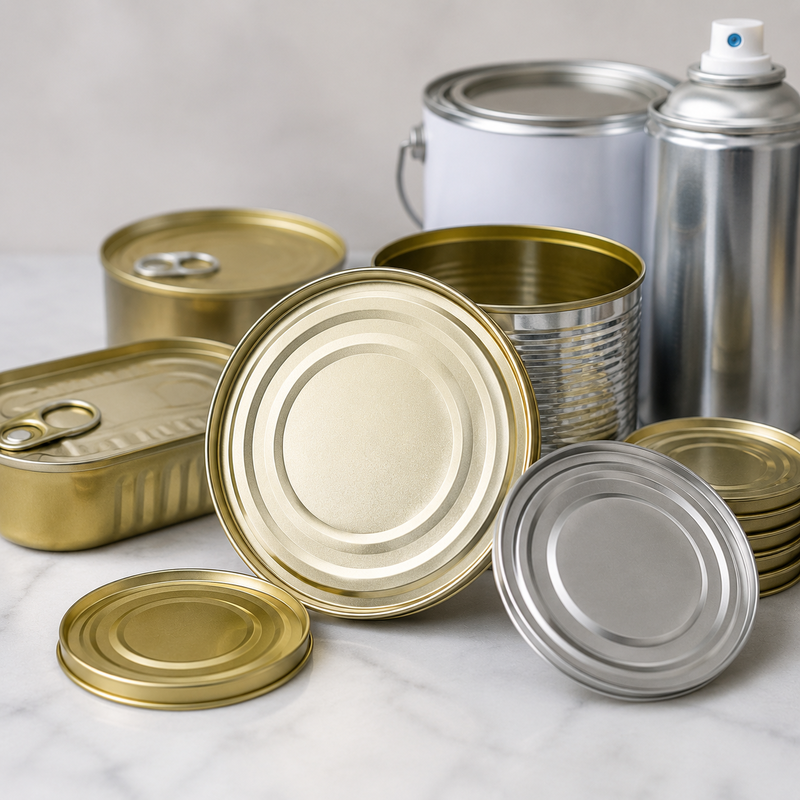
In the global metal packaging market, ensuring the structural sealing and long-term chemical isolation of containers is essential for preserving high-perishability goods. Our specialized Tinplate Lid series is meticulously manufactured to serve as a high-performance food can material for automated canning systems worldwide. Utilizing top-tier electrolytic tinplate (SPTE) and tin-free steel (TFS) substrates, these ends are engineered to provide an impenetrable physical barrier against external environment degradation factors. Whether deployed as a top closure or a heavy-duty can bottom, our products prevent atmospheric oxidation and product leakage under diverse storage conditions.
Designed with an optimal mechanical profile, our Tinplate Lid products feature uniform material thickness and precise dimensional tolerances to guarantee seamless crimping on high-speed industrial seaming lines. By utilizing advanced metallurgy, the material eliminates the risk of structural splitting or microscopic fractures during the high-pressure double-seaming process. These tinplate components are trusted across the agricultural, maritime, and chemical manufacturing sectors to protect the original flavors, colors, and safety of packaged contents over extended supply chain lifecycles.
Core Product Features
The exceptional market performance of our Tinplate Lid lineup is driven by targeted physical and chemical engineering principles:
-
Advanced Corrosion Resistance Matrix: Engineered directly as a specialized food can material, the underlying steel is protected by a precise electrolytic tin layer and a specialized chromium-based chemical passivation film. This multi-stage structural coating isolates the metal core from aggressive chemical attack by organic acids and salts.
-
Specialized Anti-Acid & Anti-Sulfur Lacquering: To handle specific food chemical compositions, we offer high-performance internal coatings. Our customized golden and aluminum-paste lacquers are designed to resist sulfur blackening caused by high-protein meat processing, and acid stripping from tropical fruits.
-
Excellent Retort & Thermal Stability: The structural integrity of the container ends is maintained even when subjected to strict high-temperature retort sterilization processes (reaching up to 121°C or higher). The metal substrate and internal lacquer coats do not peel, blister, or degrade during extreme thermal fluctuations.
-
Hermetic Air-Tight Sealing Security: Each lid is designed with optimized curl geometries and can be equipped with food-grade liquid sealing compounds. This ensures a true hermetic seal that completely blocks oxygen ingress and moisture migration, ensuring consistent shelf stability.
Technical Specifications Table
To facilitate seamless procurement and ensure flawless technical integration with your manufacturing lines, our standard and high-performance Tinplate Lid variants are manufactured according to the following parameter matrix:
| Technical Parameter |
Specification Standard & Range Varieties |
| Substrate Type |
Electrolytic Tinplate (SPTE) / Tin Free Steel (TFS) |
| Material Thickness |
0.19mm, 0.20mm, 0.21mm, 0.22mm, 0.23mm (±0.005mm Tolerance) |
| Standard Mould Size |
200# (49mm), 202# (52mm), 209# (62mm), 300# (73mm), 307# (83mm), 401# (99mm), 603# (153mm) |
| Target Components |
Universal Can Bottom Ends / Sanitary Can Lids / Can Component Ends |
| Internal Coating System |
Golden Lacquer, Silver Lacquer, Clear Organosol, Aluminum Paste Coating |
| External Coating System |
High-Gloss Golden Lacquer, Clear Shield Lacquer, Plain Finish |
| External Printing Formats |
High-Definition CMYK Lithographic Printing / Custom Logo Branding |
| Applicable Content Profiles |
High-Acid Pineapple, Meat/Fish Preserves, Sulfur-Rich Beans, Tomato Paste |
| Packing Configurations |
Dust-Free Inner Protective Bags + High-Strength Seaworthy Paper Cartons |

Deep Customization & Engineering Capabilities
We understand that standard specifications do not fit every processing application. Our modern processing facility specializes in tailoring every Tinplate Lid order to match your exact food chemistry and mechanical sealing needs. Clients can specify exact differential tin coating masses, distinct mechanical temper specifications, and target interior lacquer thicknesses designed to resist chemical interaction with specialized products like tomato paste, citrus fruits, or processed seafood.
Beyond dimensional adjustments, our engineering services provide comprehensive structural customization. We support the integration of custom external lithographic printing, allowing you to print precise brand logos, operational tracking barcodes, and vibrant graphic patterns directly onto the lid surface. Our automated shearing and stamping machinery can produce specialized open-top ends, heavy-gauge bottom closures, and custom profiles that integrate smoothly into your automated canning machinery, minimizing line friction and maximize processing throughput.
Frequently Asked Questions (FAQ)
Q1: How do I select the right internal lacquer coating for high-sulfur foods like canned meat or beans?
A1: For high-protein, sulfur-rich foods such as meat, seafood, and beans, we recommend our specialized aluminum-paste or sulfur-resistant golden internal lacquer. This chemical barrier prevents sulfur compounds from reacting with the steel base, avoiding unsightly black iron-sulfide stains and keeping the package interior completely clean.
Q2: What specific properties make this tinplate lid an excellent choice as a food can material?
A2: Our material provides a complete chemical and physical shield. It combines the structural strength of low-carbon steel with the corrosion resistance of high-purity tin. It is non-toxic, safe for direct food contact, and withstands high-temperature retort cooking without releasing metallic ions or suffering lacquer peeling, protecting product freshness.
Q3: Can your 99mm (401#) tinplate lid handle highly acidic contents like sliced pineapple or citrus juice?
A3: Yes, absolutely. For high-acid food categories like pineapple, tomato products, or vinegar-based pickles, we apply a robust multi-layer organic clear or golden lacquer coating over a heavy tin mass base. This double-layer protective system provides long-term resistance against acid stripping and prevents pinhole corrosion.
Q4: What is the Minimum Order Quantity (MOQ), and how are the lids protected against transit rust?
A4: Our standard production minimum order requirement is 2,000,000 pieces per batch run. To guarantee zero rust formation during maritime shipping, the lids are packed into specialized moisture-proof inner bags, arranged into heavy-duty paper cartons, and secured onto reinforced, export-compliant pallets with vapor-corrosion-inhibitor wrapping.


 Your message must be between 20-3,000 characters!