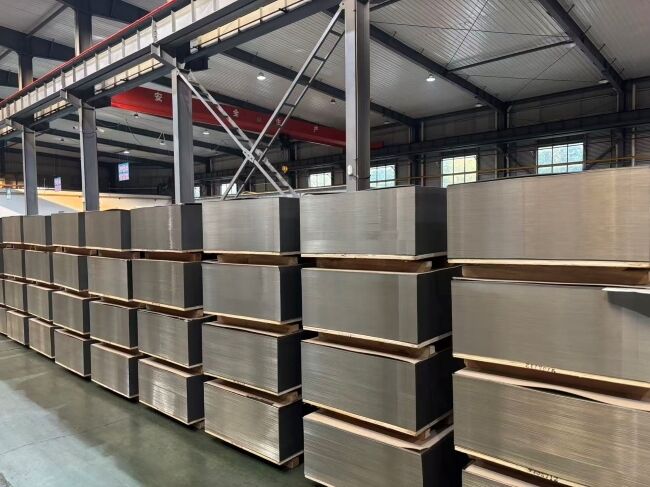
Electrolytic Tinplate Sheets - For Food Packaging
Product Description
Our Electrolytic Tinplate Sheets are high-quality materials specifically designed for food packaging. They are widely used in the food processing industry. We offer a variety of tin coating options to ensure the best packaging solution for your production process. Whether for beverages, canned food, or other food products, our Electrolytic Tinplate Sheets provide excellent protection to keep food safe and fresh.
Features & Characteristics
1. High Quality: Our Electrolytic Tinplate Sheets are made from premium raw materials and meet international standards. They have a smooth surface and are easy to process.
2. Various Tin Coating Options: We offer tin coating options ranging from 2.8g/m² to 5.6g/m², catering to different packaging requirements.
3. Food-Safe: Specifically designed for food packaging, ensuring no harm to food and meeting stringent food safety standards.
4. Excellent Corrosion Resistance: Our Electrolytic Tinplate Sheets provide excellent corrosion resistance, protecting food from external environmental factors.
5. Custom Services: We offer customized sizes and packaging options based on customer needs.
Applications:
1. Beverage cans
2. Canned food
3. Dry fruit and other food packaging
4. Food factories and other related industries
Technical Parameters Table
| Parameter Category |
Specification Details |
| Material Type |
Electrolytic Tin Plate (ETP) / Tin-Free Steel (TFS) |
| Base Steel |
MR, SPCC |
| Key Thickness |
0.16mm, 0.18mm, 0.35mm (Range: 0.15-0.46mm) |
| Tin Coating (ETP) |
1.1/1.1 to 5.6/5.6 g/m² (Standard & Custom) |
| Temper Grades |
T1, T2, T3, T4, T5, DR7, DR8, DR9 |
| Hardness Levels |
TS230-TS290, TH415-TH620 |
| Surface Finishes |
Bright, Stone, Matte, Silver, Rough Stone |
| Primary Application |
Food Can Ends, Lids, Bottom Caps |
Frequently Asked Questions (FAQ)
Q1: What makes this tinplate specifically "alkali-resistant"?
A1: The resistance is achieved through a combination of the inherent properties of the tin or chromium coating and the application of specialized, food-grade internal lacquers (e.g., epoxy-phenolic). These are tested to withstand the chemical attack from alkaline foods, preventing corrosion and sulfide staining.
Q2: Which is better for my application, ETP or TFS?
A2: ETP offers excellent overall corrosion resistance and solderability. TFS provides superior paint/adhesive adhesion and outstanding resistance to sulfide staining. The choice depends on your specific food content, manufacturing process (welding vs. soldering), and internal coating requirements.
Q3: Can I order tinplate with a specific internal coating already applied?
A3: Yes, we offer pre-lacquering services. You can specify the internal coating type (e.g., 202 for chili sauce, 603 for fruits) based on your product's pH and characteristics, streamlining your production process.
Q4: What quality certification do you provide?
A4: We supply a Mill Certificate with each shipment, detailing the chemical composition, mechanical properties (hardness, temper), coating mass, and compliance with relevant standards. This serves as your material quality guarantee.
Q5: What information do you need to provide an accurate quotation?
A5: Please specify: Product name (ETP/TFS), thickness, temper, coating weight, dimensions (width, coil ID or sheet size), surface finish, quantity, and the intended food application to determine the best internal coating recommendation.
202 Chrome plate(Chilli sauce) 202 tin plating (tomato) 300 tin plating( tomato)
300 fruit tin plating( fruit) 401 tin plating( tomato) 401 tin plating( fruits)
603 tin plating( tomato) 603 tin plating( fruit)
LID WORKSHOP
Production Process
PARTNER
CERTIFICATE


 Your message must be between 20-3,000 characters!